

Look Up, Not Down
What the Sky Is Telling You That Your Weather App Can't

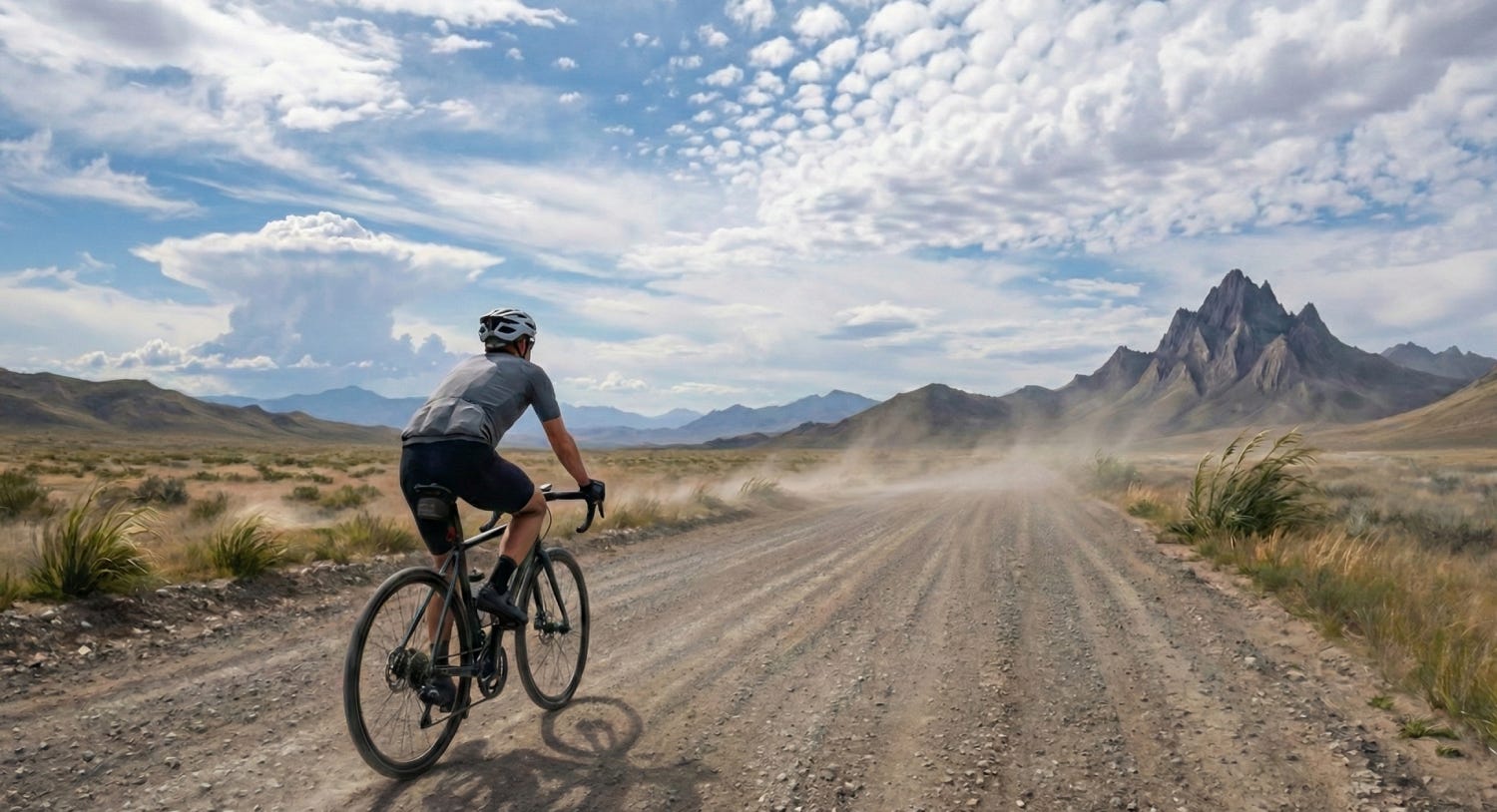
The bars disappeared somewhere between the last gas station and the beginning of whatever this road has become. Gravel, mostly. Some optimistic cartographer once called it a highway, but that was probably in the 1970s, and optimism was cheaper then.
You’re forty miles from the nearest town with a name you can pronounce. The sky to the west has turned the colour of a week-old bruise, that sick greenish-purple that doesn’t appear in any paint swatch because no one would voluntarily live with it on their walls. You pull out your phone with the muscle memory of a generation trained to outsource every instinct to a rectangle of glass. “No Service.” Two words.
And just like that, you’re blind.
Except you’re not. You never were. You just forgot how to see.
The Lie of the Thirty Percent
Here’s what I think about weather apps: they’re gossip. Sophisticated gossip, sure. Satellite-fed and computationally expensive gossip. But gossip nonetheless. The forecast on your screen is based on data collected from weather stations that are, more often than not, sitting on flat ground near airports. The most meteorologically boring places on earth.
You are not a region. A “30% chance of rain” is a statement about a region. You are a person on a bicycle, on a specific ribbon of dirt, under a specific column of atmosphere where the valley funnels wind into a thing that hits you in the teeth, and the thermal dynamics of the rock face beside you are creating weather events no model predicted because no model was asked.
The sky above your head is running a real-time, high-definition broadcast of exactly what’s about to happen to you. It’s been running since before you were born. The feed is free. You just need to learn the language.
Three Clouds That Will Save Your Life (and One That Will Ruin Your Day)
You don’t need a meteorology degree. You need to recognize four shapes.
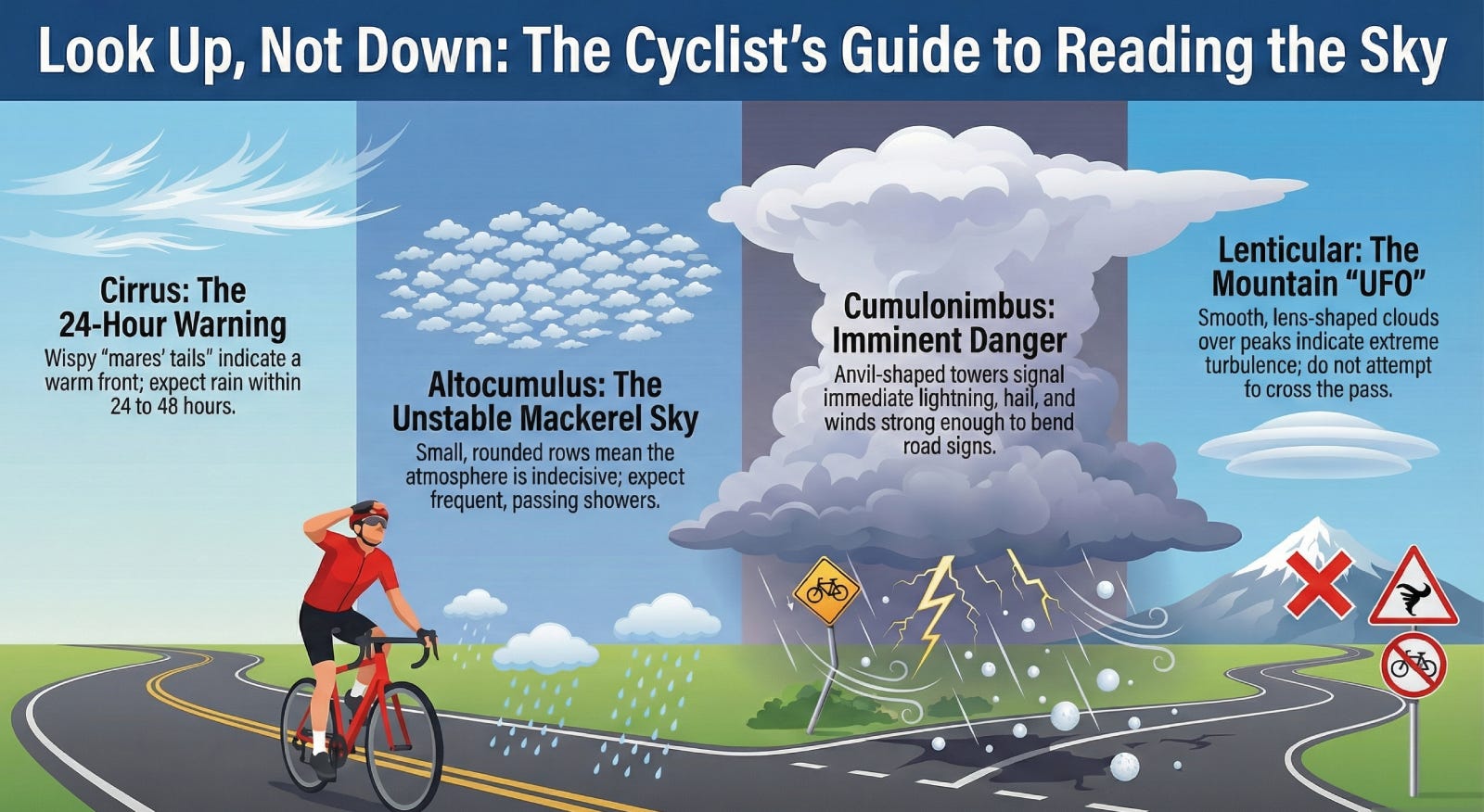
Cirrus. The wispy ones. Mares’ tails, your grandmother might have called them—those high, thin hooks scratched across the upper atmosphere like someone dragged a white pen across wet blue paper. Alone, they’re harmless. Beautiful, even. But watch them. If they’re thickening, if that thin scratch is becoming a smear, a warm front is sliding in behind them. Rain in twenty-four to forty-eight hours. Not urgent. But worth noting. File it away the way you’d note a slow leak in your rear tire. It’s not stopping you today, but it will stop you eventually.
Altocumulus. The mackerel sky. Rows of small, rounded clouds that look like fish scales or, if you’re less poetic, like someone bubble-wrapped the atmosphere. Sailors and cyclists share the same exposure to the sky’s moods, and the old sailor’s rhyme holds true on two wheels the same as it does on two masts: Mackerel sky, mackerel sky, never long wet, never long dry. It means instability. The atmosphere can’t make up its mind. Expect showers that come and go. Ride through them or wait them out, your call. But don’t trust a blue patch to last.
Cumulonimbus. Turn around. I’m serious. If you’re looking at a tower of cloud that builds vertically like a fist punching upward until the stratosphere flattens its top into that unmistakable anvil shelf, and the edges are sharp and crisp, it’s still growing. Still feeding. This isn’t rain. This is lightning, hail, and the kind of wind that bends road signs. Now, if those edges have gone soft and fuzzy, like a photograph left in the sun, that’s a different story. The storm is spending itself. You can probably wait it out under a bridge or a bus shelter and watch it dissolve. Probably.
Lenticular clouds. The UFOs. Smooth, lens-shaped, stacked over mountain peaks like God’s paperweights. They look serene. They are lying. Lenticular clouds form in standing waves of air—extreme turbulence made visible. If you see them sitting over the ridge you planned to cross today, don’t cross it today. Find a café. Read a book. The pass will still be there tomorrow, and so will you, which is the point.
Your Body Already Knows
Before the rain arrives, the world sends runners ahead.
On a hot afternoon, a cold blast of air hits you like someone opened a walk-in freezer. Sharp and immediate, ten degrees cooler in seconds. That’s an outflow boundary. The thunderstorm’s downdraft is pushing cold air out ahead of itself like a shockwave. You have maybe fifteen minutes. Don’t check your phone. Check your panniers for your rain jacket. Find a tree that isn’t the tallest one around. Pitch your tarp if you’ve got one.
Then the world goes quiet. The “calm before the storm” isn’t poetry. It’s physics. Low pressure pulls the air inward and upward, and everything you’d stopped noticing, the birdsong, the white noise of insects and leaves, drops away. You don’t hear the silence so much as feel it on your skin. Pay attention to the absence.
And then you smell it. Petrichor; that strange, old-basement scent of rain hitting ground that hasn’t been wet in days. It travels on the wind ahead of the storm front, along with ozone pushed down from the upper atmosphere by the downdraft. If the air suddenly smells like wet stone and electricity, you don’t need a radar image. You need a shelter.
The Poor Man’s Barometer
This one is almost too simple to feel legitimate. If you’re riding with a Garmin, a Wahoo, or any watch with a barometric altimeter, and most of us are, you’re already carrying a weather station.
These devices measure altitude by reading air pressure. Which means if you’re not moving, but your altitude reading is changing, the pressure is changing. Camp for the night. Calibrate your altitude before you crawl into your sleeping bag. When you wake up stiff and wondering why you thought this was fun, check the reading.
If your watch insists you’ve climbed a hundred feet in your sleep, the barometric pressure has dropped, and weather is coming. It could be six hours out or two, but it’s coming. A rising reading means the opposite. Clear skies.
The threshold that matters: a drop of one or two millibars per hour is the atmosphere breathing normally. A drop of five or more per hour is the atmosphere holding its breath before it screams.
Wind Doesn’t Lie (But Valleys Do)
This one takes practice, and it works best in the Northern Hemisphere.
Stand with your back to the wind. If the wind shifts clockwise over time—east to south to west, the low-pressure system is passing to your north. Things are likely clearing. But if the wind backs, shifting counter-clockwise—north to west to south, the system is intensifying. Tighten your hood.
One caveat: in valleys, wind channels and funnels lie to your face. It’s useless down in the corridor. Look up. The clouds above the ridgeline are telling the truth. They always are.
Train the Skill Before You Need It
None of this matters if you only remember it when you’re already soaked and shivering. So here’s the homework, and it’s the best kind, the kind you do on a bike.
I once watched altocumulus thicken all morning on the road to a mountain pass in the Pyrenees. Mackerel sky. I knew the rhyme. I knew the theory. And I kept riding, because the patches of blue between the scales looked generous enough, and the pass was only two hours away, and I’d already eaten my last energy bar, so stopping meant sitting hungry under a tree with nothing to do but think about how far back the last village was. The sky wasn’t indecisive. I was.
The rain came in sideways an hour later. My brake pads started squealing on the wet rims, this high-pitched sound that scared a goat off the trail, and the gravel turned to soup, and I spent the afternoon shivering under a rock overhang, eating crumbs out of a wrapper I’d already thrown in my handlebar bag. The pass disappeared into cloud. I’d read the sky correctly and then talked myself out of what I’d read.
Next ride, look up. Make a prediction. Say it out loud if you want. Then check the app an hour later. See how close you were. Do it again. And again. Build the instinct the way you build legs: through repetition, through getting it wrong, through slowly getting it less wrong.
Because a weather app tells you what a model thought would happen six hours ago. The sky tells you what is happening right now.
Reading the sky is just one skill you forgot you had. Train, Pack & Ride is about the rest of them, the fitness, the packing instincts, the confidence that comes from needing less and knowing more. Not a gear guide. A way of thinking about the road. [Pick up your copy here.]
Was what you just read useful? You can support my writing with a coffee. Thank you for being here. Subscribe! This means more to me than you know.

As someone who often looks at the clouds and thinks if only I knew what they were telling me, this is very useful! Another handy one is "red sky at night, shepherd's delight/red sky in the morning, shepherd's warning". Red sky comes from high pressure systems, so red sky at sunset means there's good weather to the west, and red sky in the morning means there's good weather to the east. The saying is from the UK, where weather tends to come from the west.
Love this. As my wife and I head out for a bikepacking trip around southern Arizona with very changeable weather on the horizon, this is a good reminder.